Low Temperature Co-fired Ceramic (LTCC) is a core technology for the
integration of packaging and circuit substrates in a new generation of
high-performance ceramics. Utilizing ceramic as the base material and
incorporating processes such as precision printing, laminated co-firing,
and micro-nano processing, LTCC enables the embedding of passive
components and three-dimensional high-density circuit integration.
It combines advantages such as miniaturization, high reliability, low loss
at high frequencies, and resistance to extreme environments. LTCC
serves as a core fundamental process in fields like 5G/6G communication,
microwave and millimeter-wave, aerospace, automotive electronics, and
high-end industrial control. Furthermore, it stands as a pivotal solution
for achieving high-density, miniaturization, and integration of electronic
devices.
Relying on our fully independently developed material system and matu
re full-process production line, our company has achieved the
industrialization of LTCC technology, completed the localization
substitution of core raw materials such as raw ceramic chips and slurry,
and can provide integrated services ranging from customized design,
process development to large-scale production. Our products cover
multiple scenarios such as civilian communications and military
electronics, offering both high performance and high cost-effectiveness
LTCC technology utilizes inorganic ceramic powder as the base
material, mixed with organic binders to form a slurry, and then processed
through tape casting to produce ultra-thin green ceramic
tapes. Layer-to-layer connectivity is achieved through laser/mechanical
drilling and micro-via grouting, while high-precision screen printing is
employed to complete the circuit pattern and the fabrication of
embedded passive components. Based on product requirements,
multiple layers of green ceramic tapes are stacked and pressed into
shape, ultimately undergoing co-firing integration at a low temperature
of 850-900℃ to form three-dimensional, high-density ceramic circuit
components that do not interfere with each other.
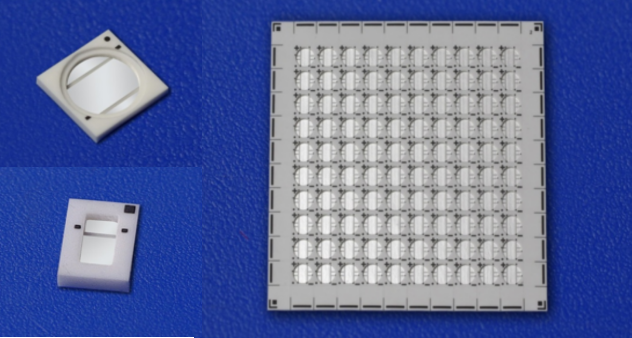
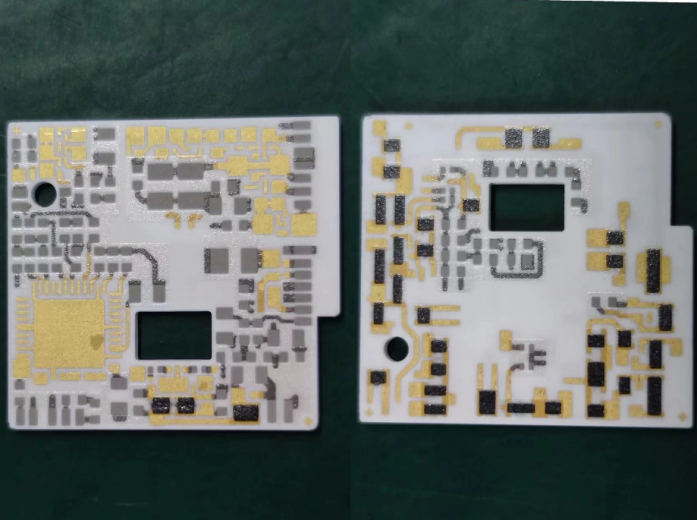
The finished product can be equipped with surface-mounted ICs, chips,
and other active devices to achieve passive/active integrated integration,
significantly reducing the size of the device and enhancing circuit
integration and stability.



 National Service Hotline